Superluminal vs GarageFarm
By Superluminal Engineering
GarageFarm came second overall, and Superluminal still had the shorter render pipeline in every scene. Classroom: 90.5 against 163.6 seconds.
Published 2026-08-04 · Updated 2026-08-08
Across all four scenes, Superluminal put the complete output on disk first and recorded the shorter render pipeline.
Superluminal and GarageFarm in the benchmark ranking
Both services are selected. The other six farms stay visible but muted for context.
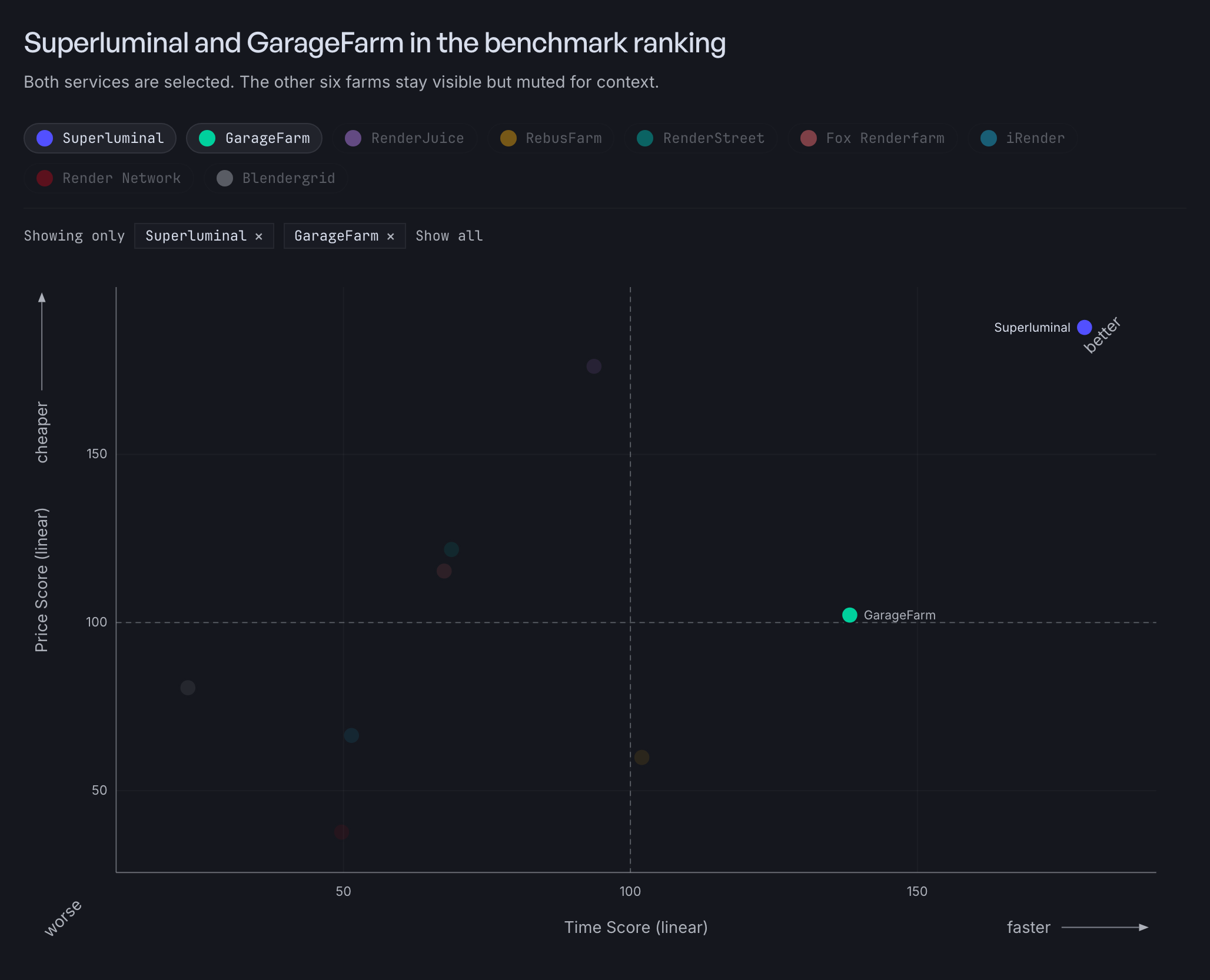
GarageFarm ranked second overall at 126.2, with a Speed Score of 138.2 and a Cost Score of 102.2. The benchmark method scores render-pipeline time and price across the completed scenes.
Render pipeline by scene
| Scene | Fastest Superluminal render pipeline | GarageFarm render pipeline | GarageFarm charge |
|---|---|---|---|
 Classroom Classroom | 90.5 s | 163.6 s | $7.55 |
 Junk Shop Junk Shop | 64.5 s | 127.3 s | $3.92 |
 Monster Under the Bed Monster Under the Bed | 59.9 s | 88.6 s | $2.73 |
 Fox (EEVEE) Fox (EEVEE) | 66.5 s, 10 nodes | 114.0 s | $1.12 |
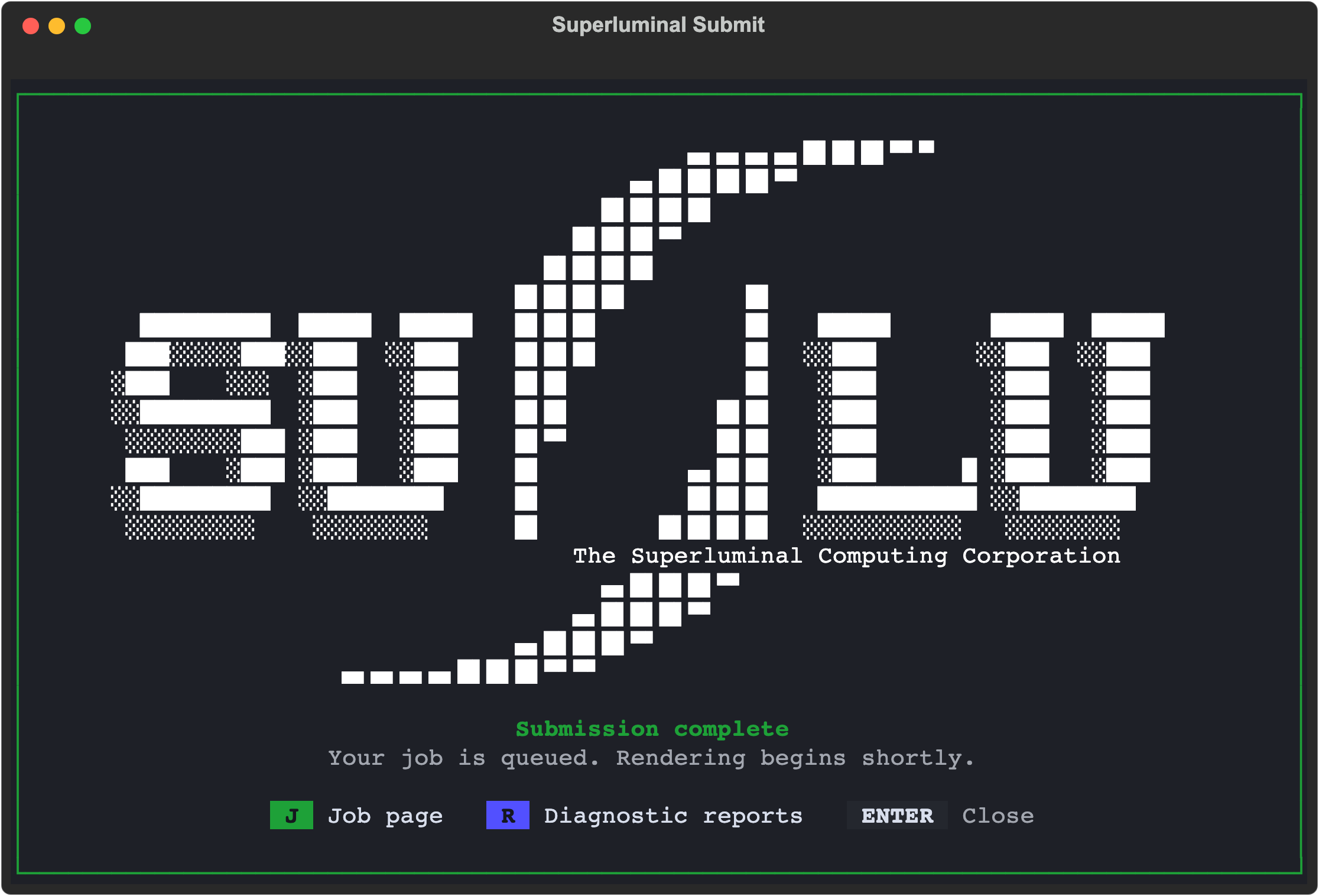
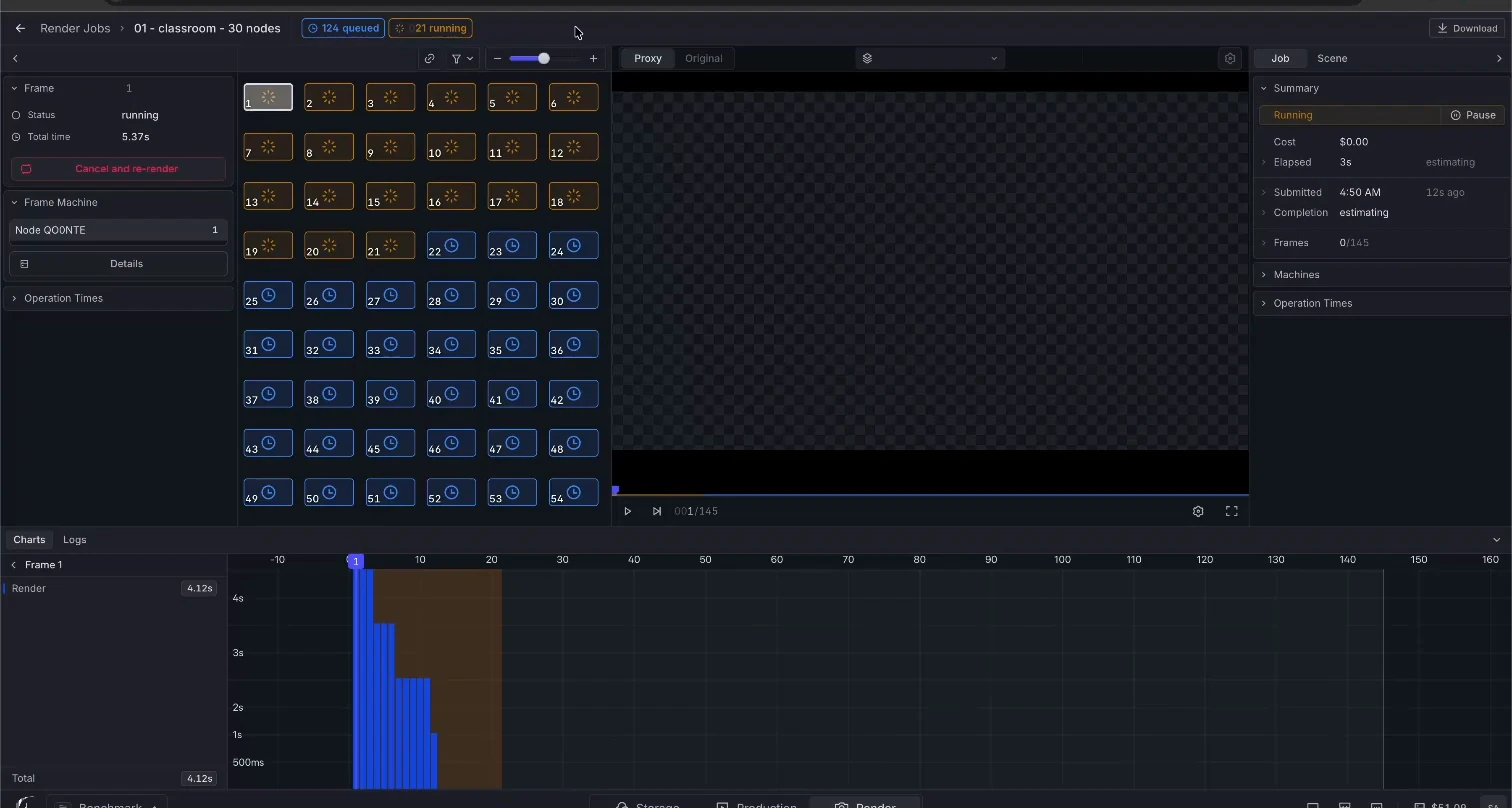
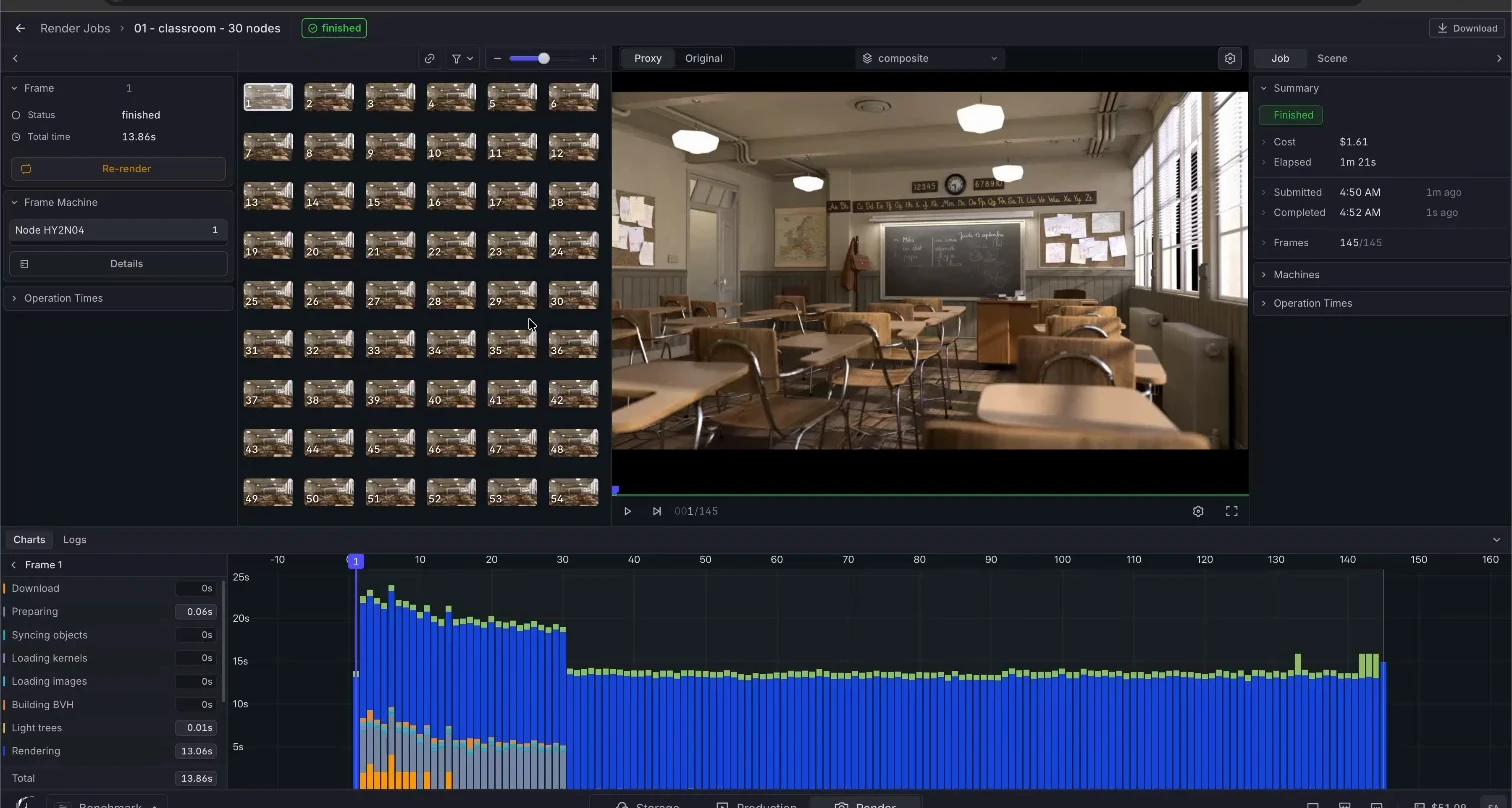
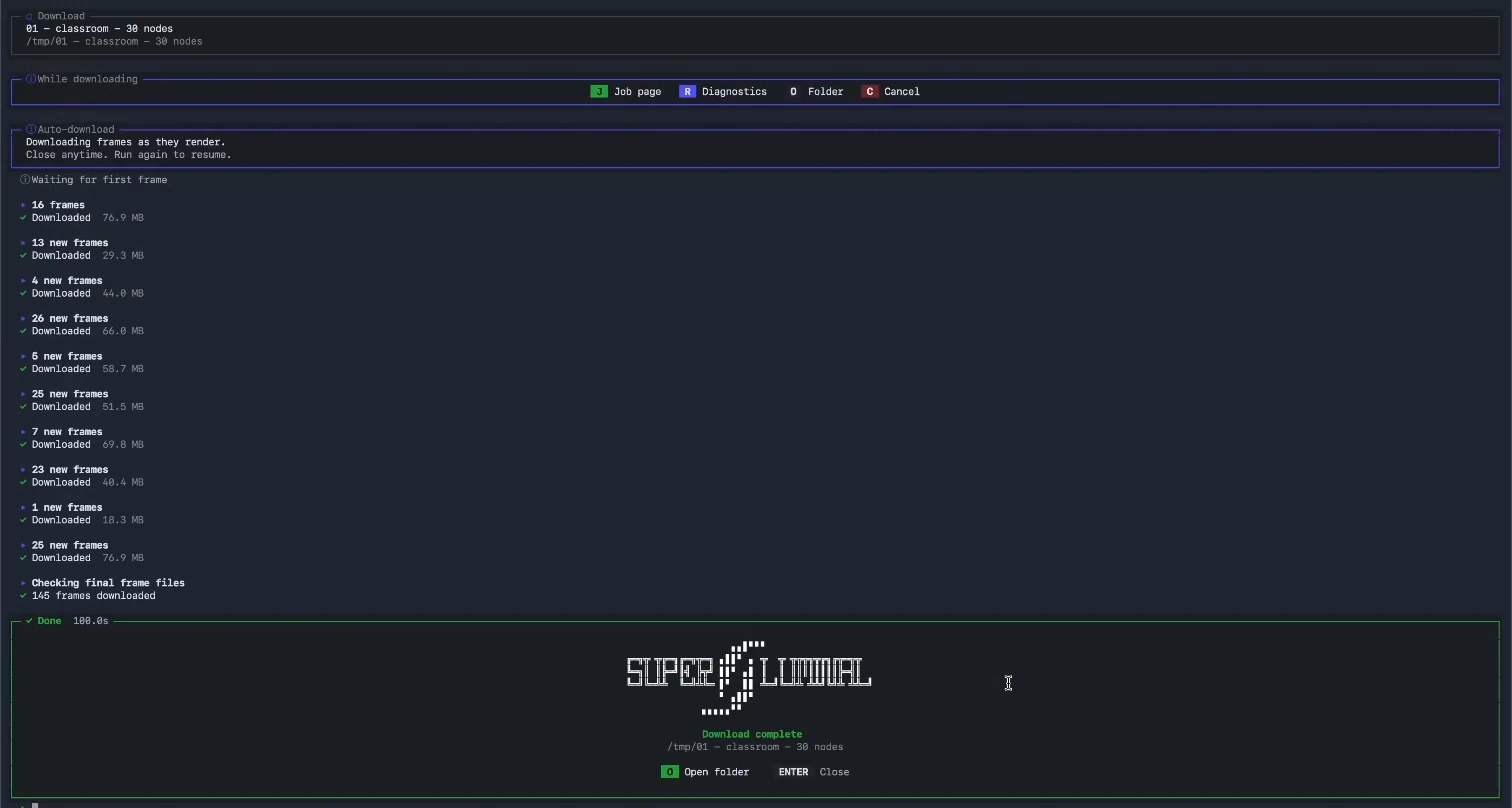
Superluminal recorded workflow
GarageFarm recorded workflow
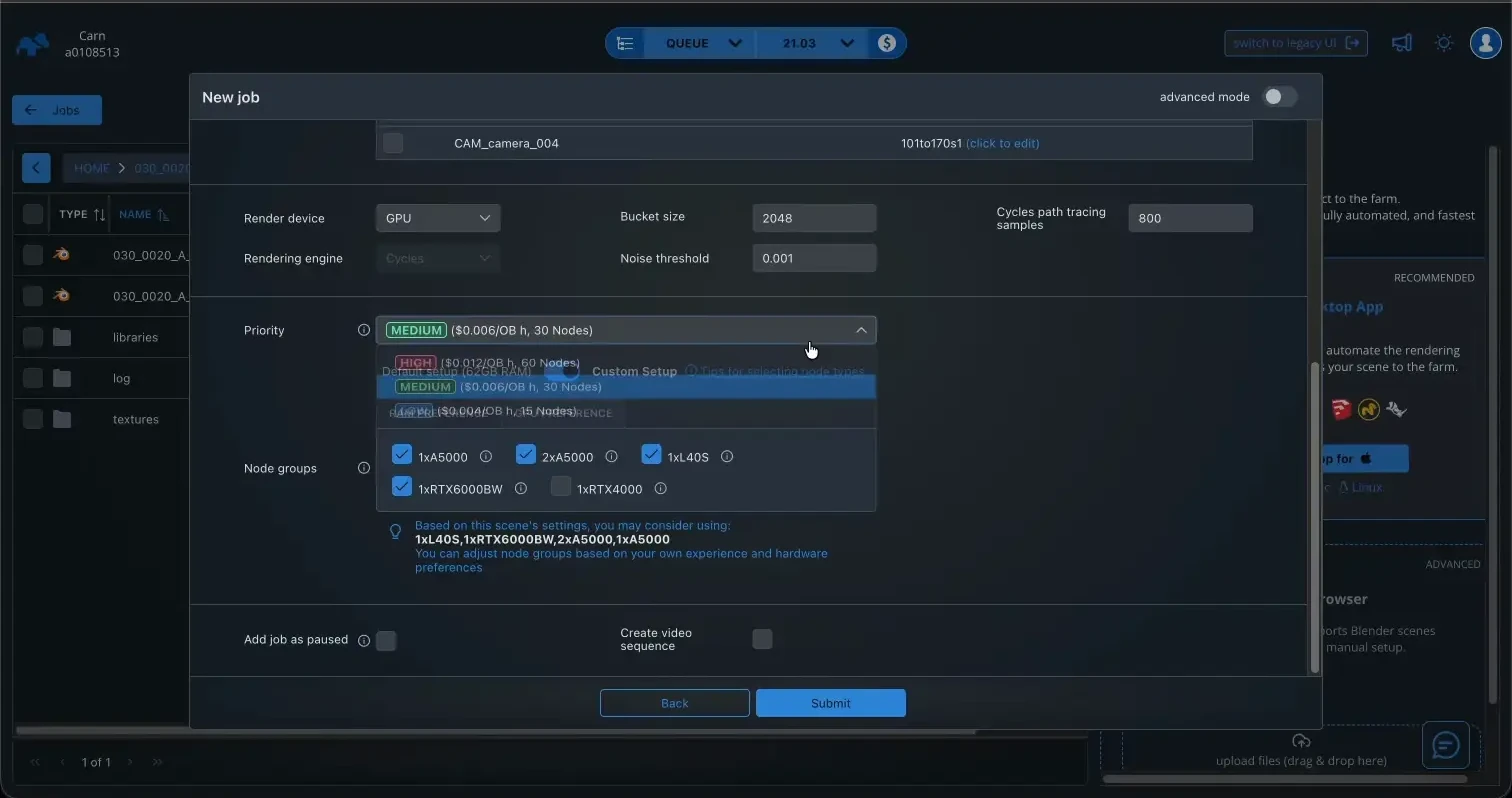
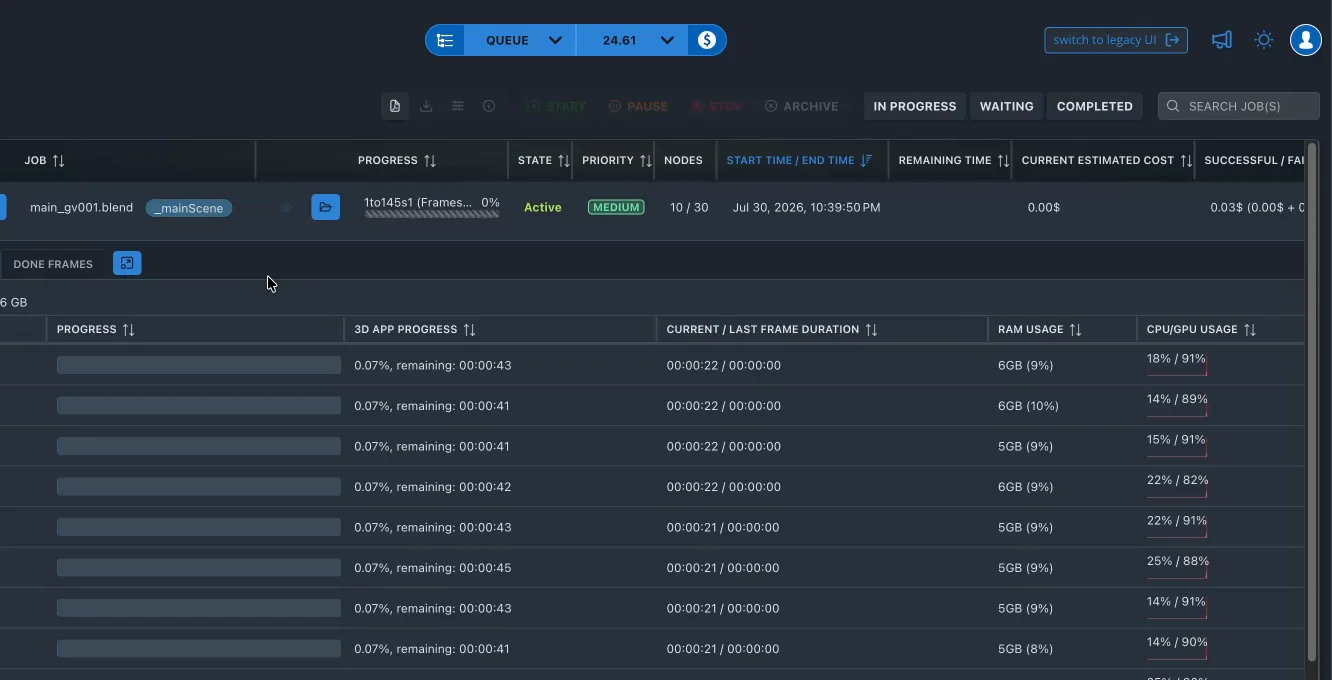
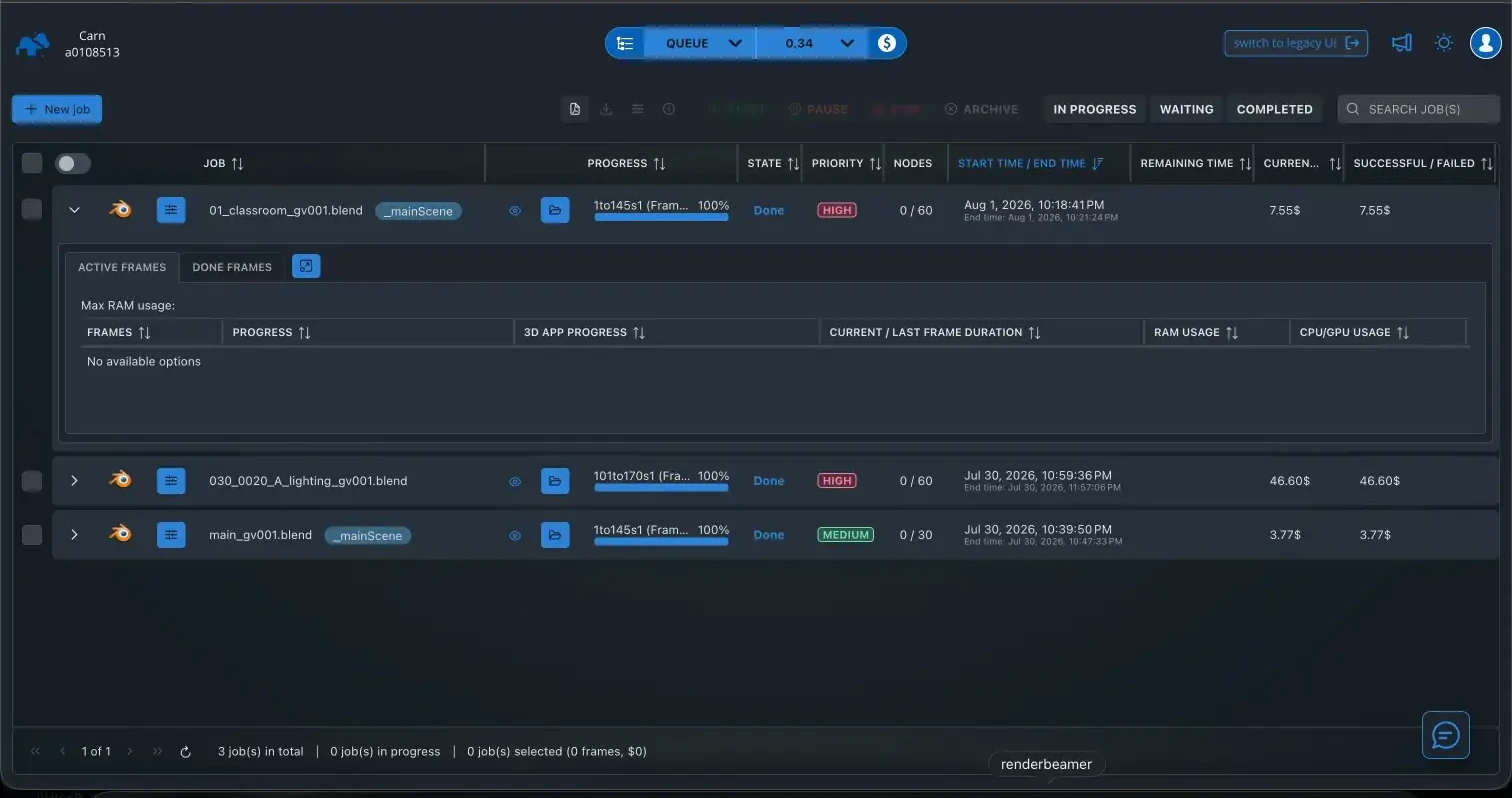
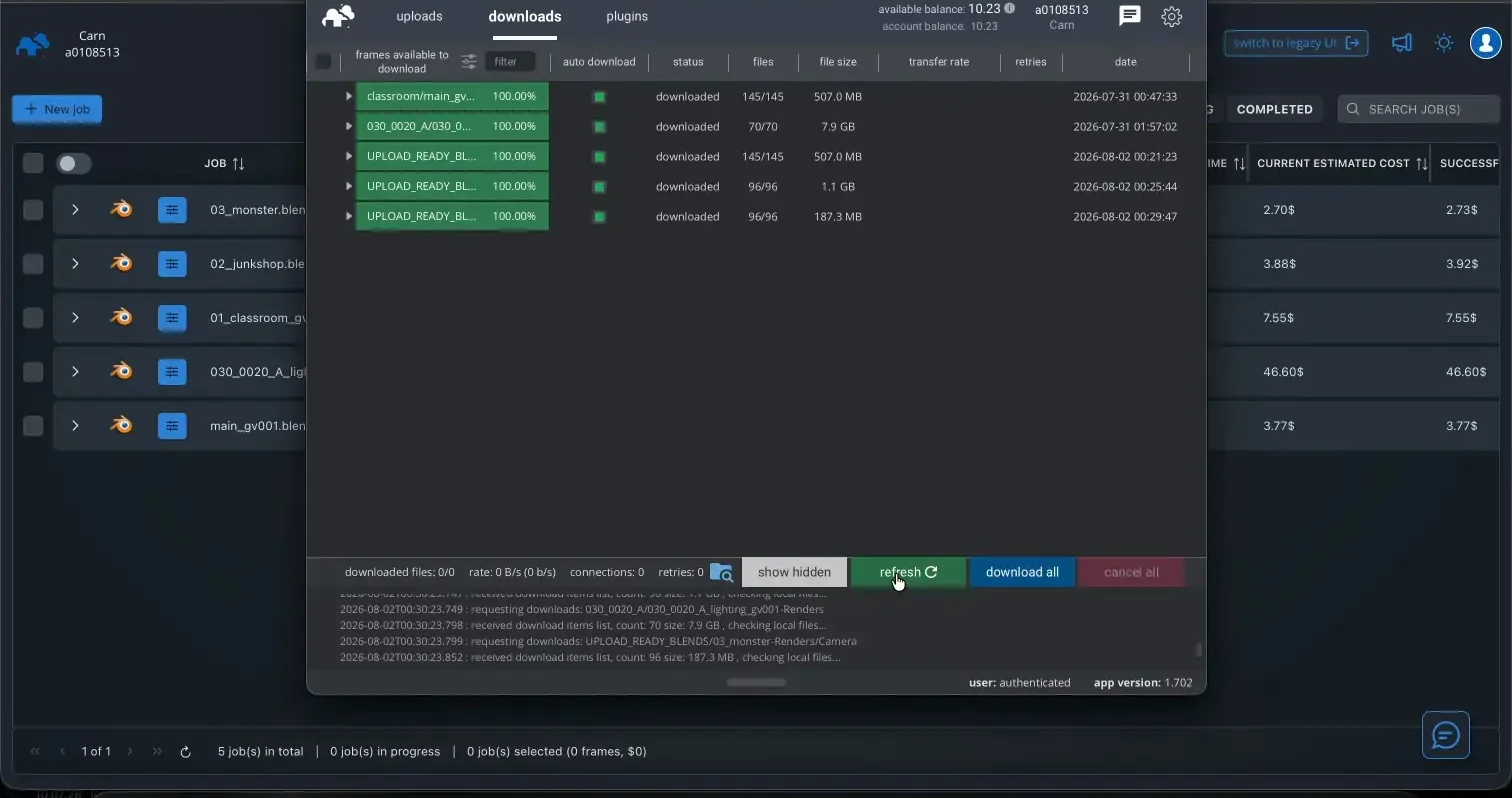
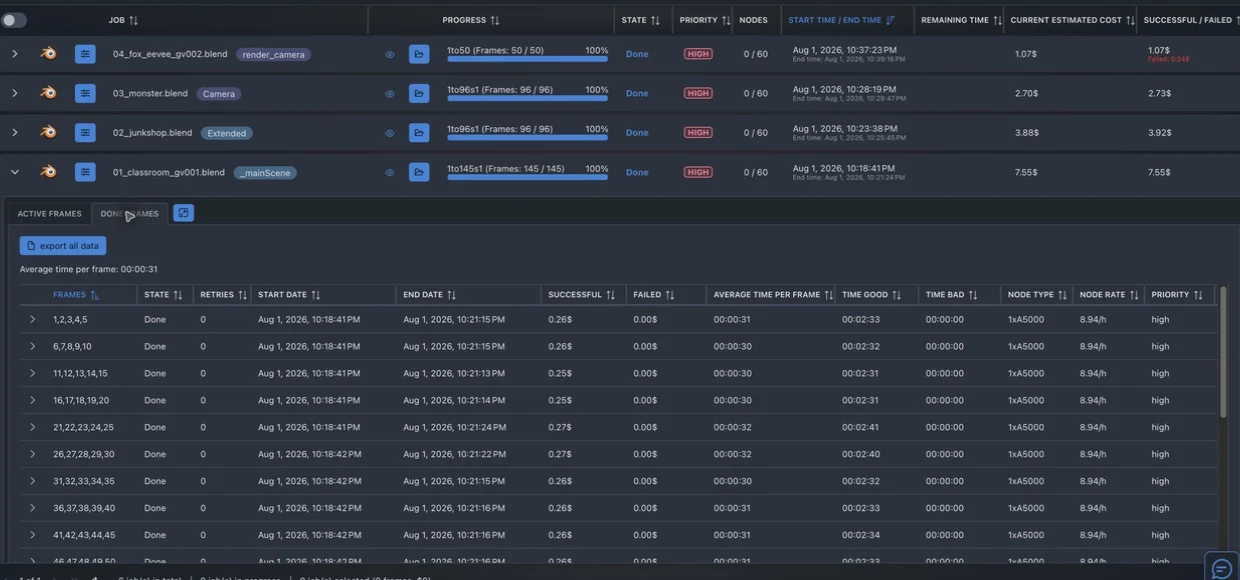
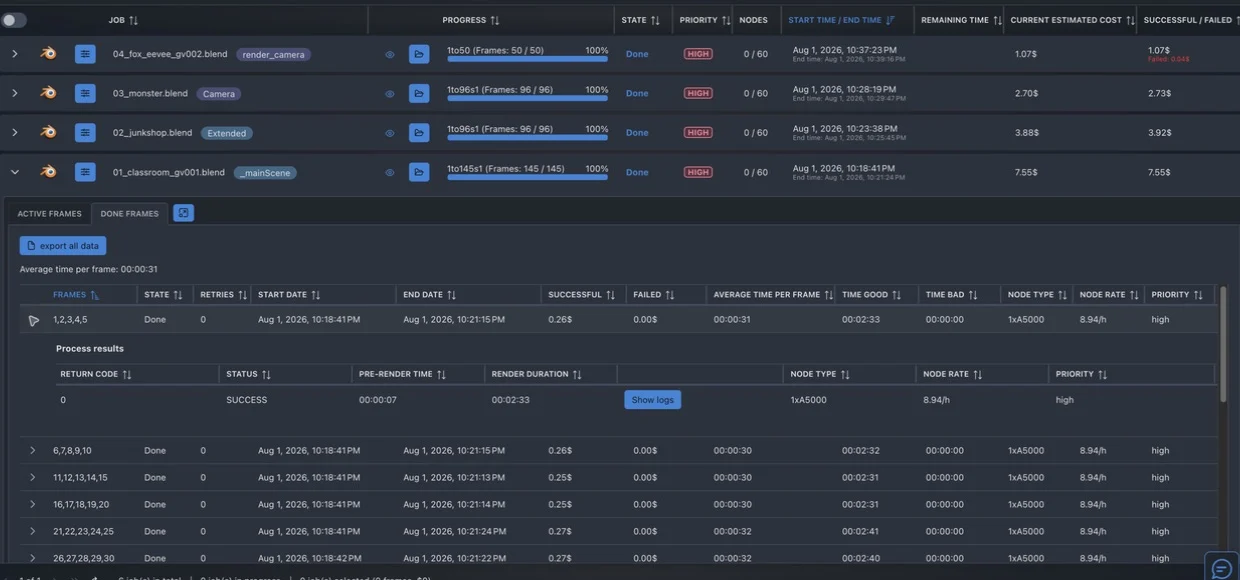
One upload, three programs
GarageFarm's desktop client compresses each package before transfer, for an effective 8.2 MB/s. That is compression, not raw network speed.
Submission and monitoring live in different places. The client uploads, then hands off to a separate web manager. On Junk Shop the manager's Done status lagged behind the last completed frame, so a finished job still read as unfinished.
The background downloader also fell behind the farm. Classroom frames were still arriving while the next scene rendered. That is where the 16.2-to-301.3-second retrieval tails come from. The client's test-job mode also produces an auxiliary job, which forced a full-job resubmit of Fox (EEVEE).
Superluminal keeps the loop in one tool. The add-on uploads, streams finished frames back while later frames render, and the web job page mirrors everything live. Nothing to hand off, no second program to check.
Capacity and billing
Each job ran at High priority. GarageFarm advertised a 60-node cap. The interface showed a peak of 29 active nodes.
GarageFarm charges a prepaid balance at $0.012 per OctaneBench-hour and shows the dollar charge after the job ends. You learn the price when it is over.
Superluminal shows the rate before you submit and the accruing charge while frames finish. Each job settles as exact dollars, at the published rates.
GarageFarm completed every scene without a defect and still finished behind in every one. That is the engineering gap when hardware is not the problem.