Superluminal vs RebusFarm
By Superluminal Engineering
RebusFarm rendered all four scenes. Only 6 of 50 Fox (EEVEE) frames reached local disk, but download does not enter its exact render-pipeline score.
Published 2026-08-04 · Updated 2026-08-07
Every tested scene reached local disk sooner with Superluminal. Its exact dollar charge was lower than RebusFarm's dated dollar estimate in every scene.
Superluminal and RebusFarm in the benchmark ranking
Both services are selected. The other six farms stay visible but muted for context.
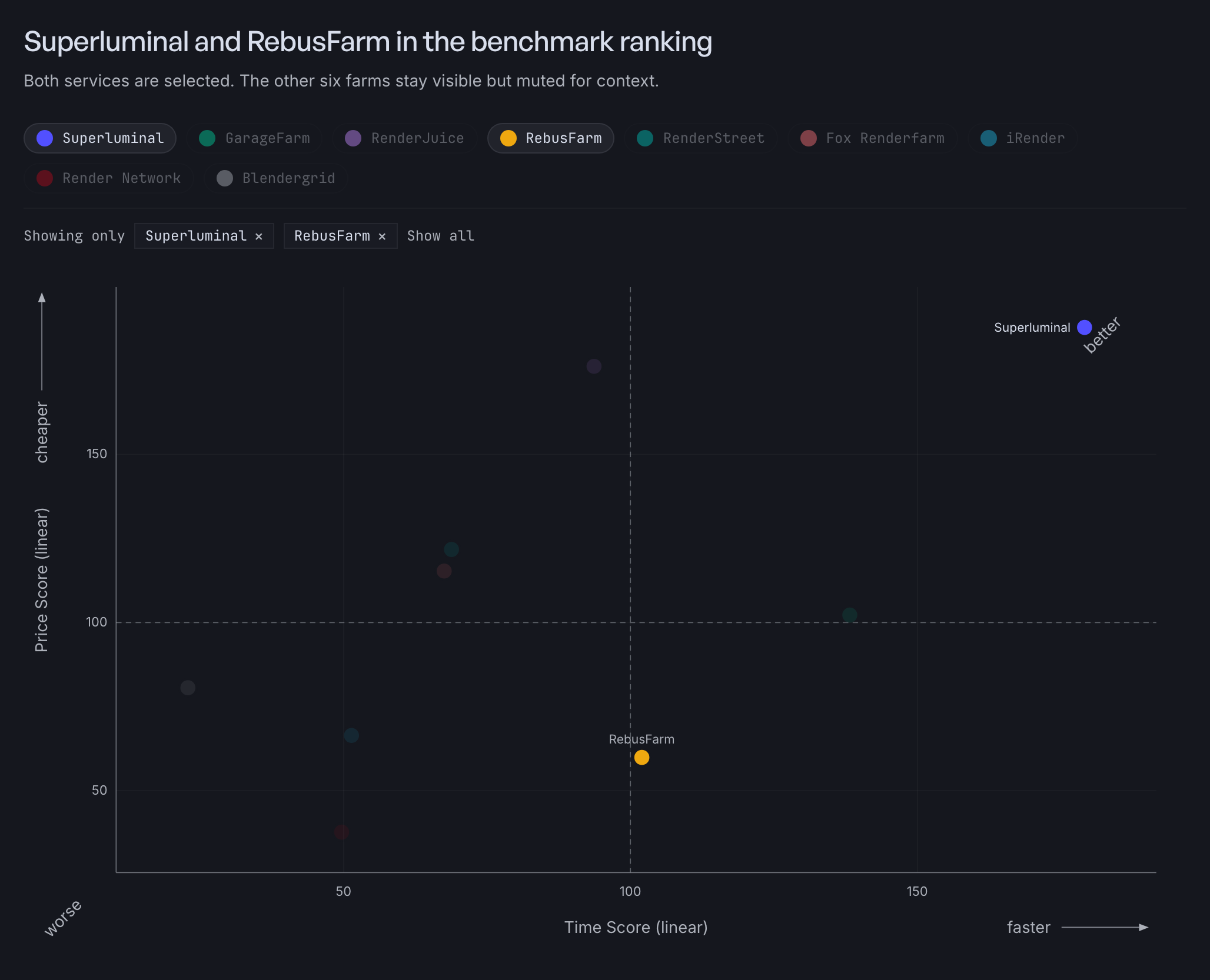
RebusFarm ranked fourth overall at 88.0, with a Speed Score of 102.0 and a Cost Score of 59.9. Only 6 of 50 Fox (EEVEE) frames reached local disk, but its completed render pipeline is exact. Download does not enter the benchmark score.
Tiers and results
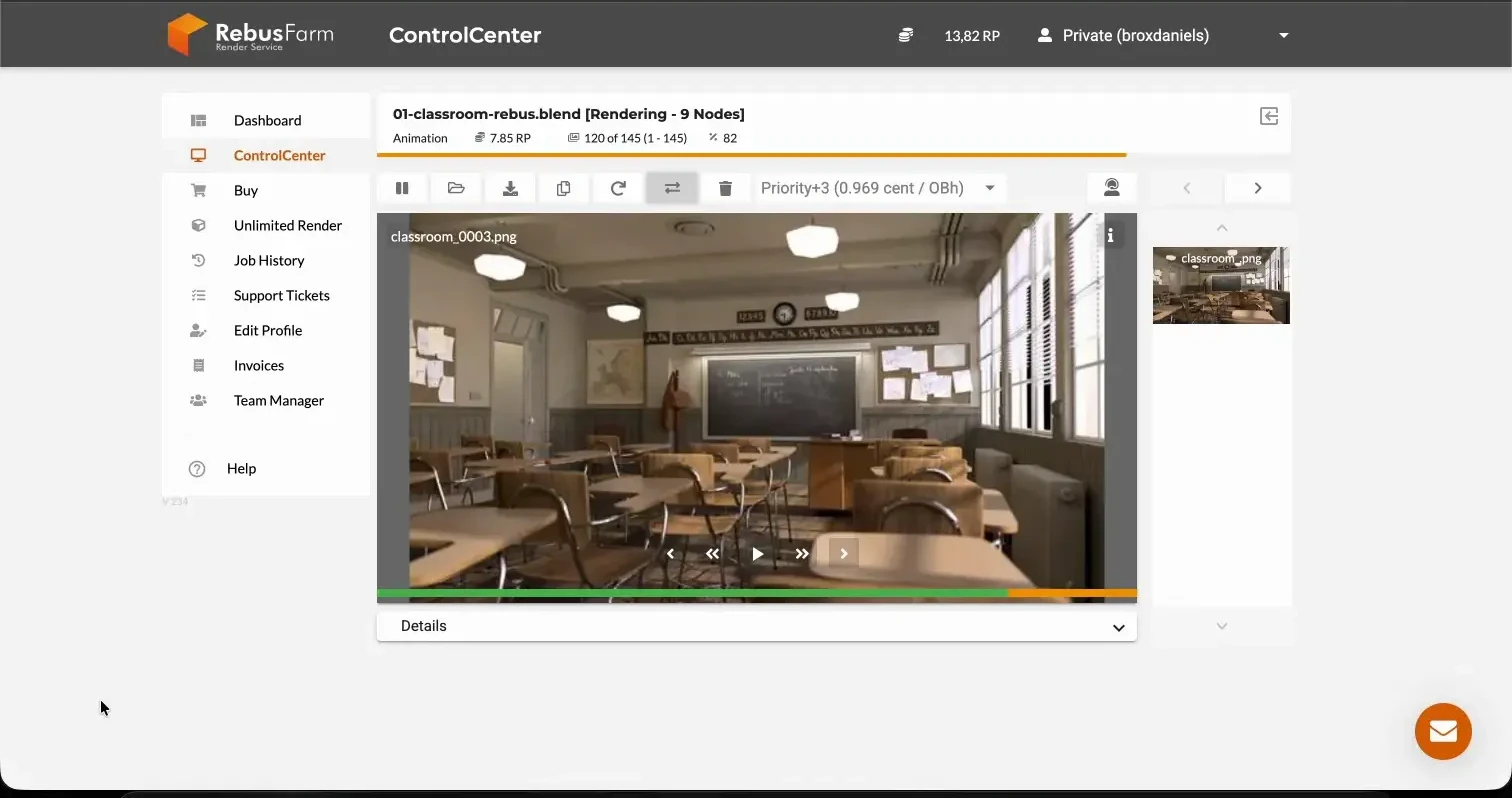
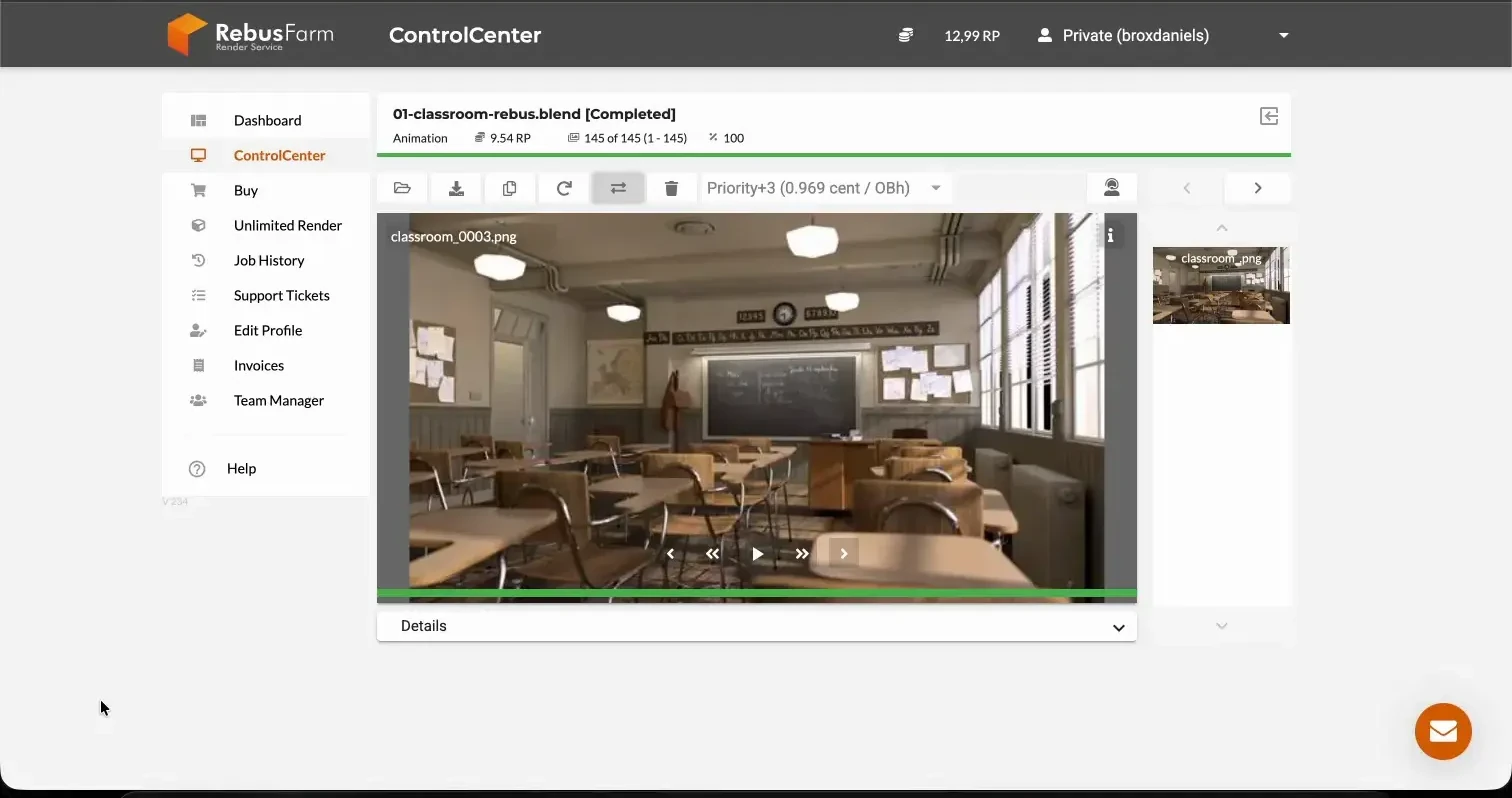
RebusFarm's Standard GPU tier did not start Classroom. We used Priority+3 for Classroom and Junk Shop, Standard for Monster and Fox (EEVEE).
| Scene | Fastest Superluminal render pipeline | RebusFarm render pipeline | Exact RebusFarm charge | Dollar estimate |
|---|---|---|---|---|
 Classroom Classroom | 90.5 s | 445.5 s | 9.741829 RP | $11.45 |
 Junk Shop Junk Shop | 64.5 s | 315.5 s | 8.799330 RP | $10.34 |
 Monster Under the Bed Monster Under the Bed | 59.9 s | 101.1 s | 3.089073 RP | $3.63 |
 Fox (EEVEE) Fox (EEVEE) | 66.5 s, 10 nodes | 168.4 s | 12.917942 RP | $15.18 |
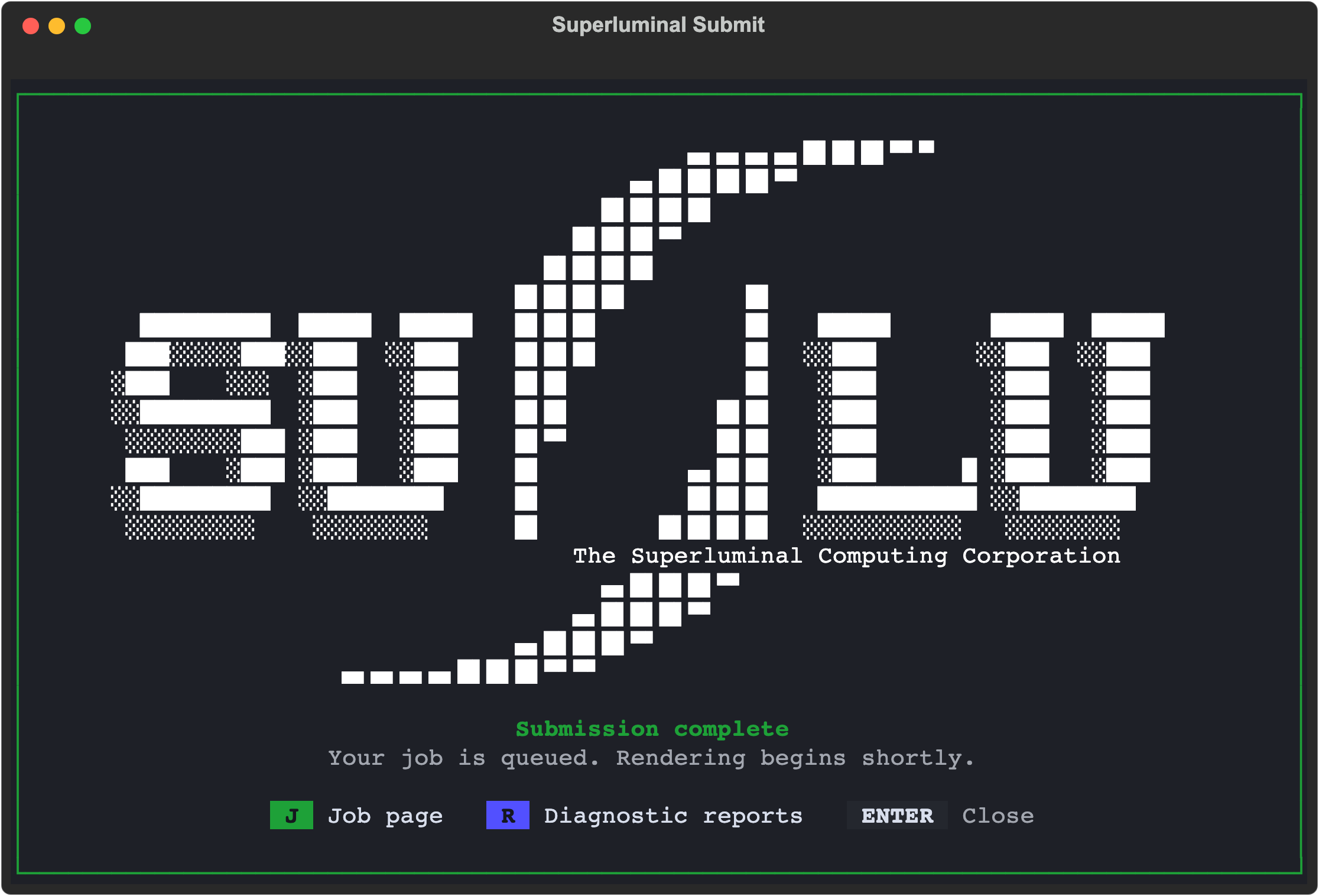
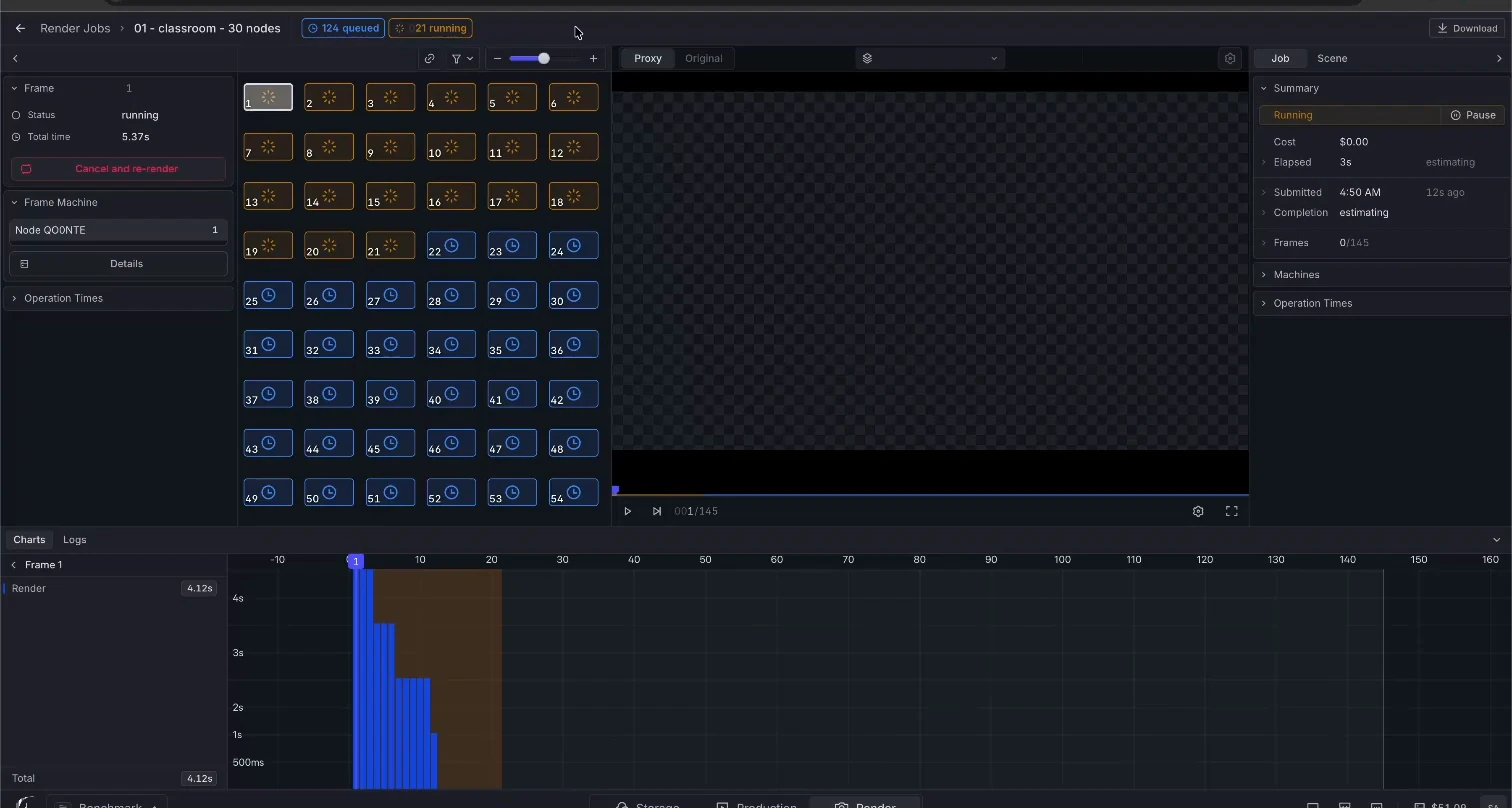
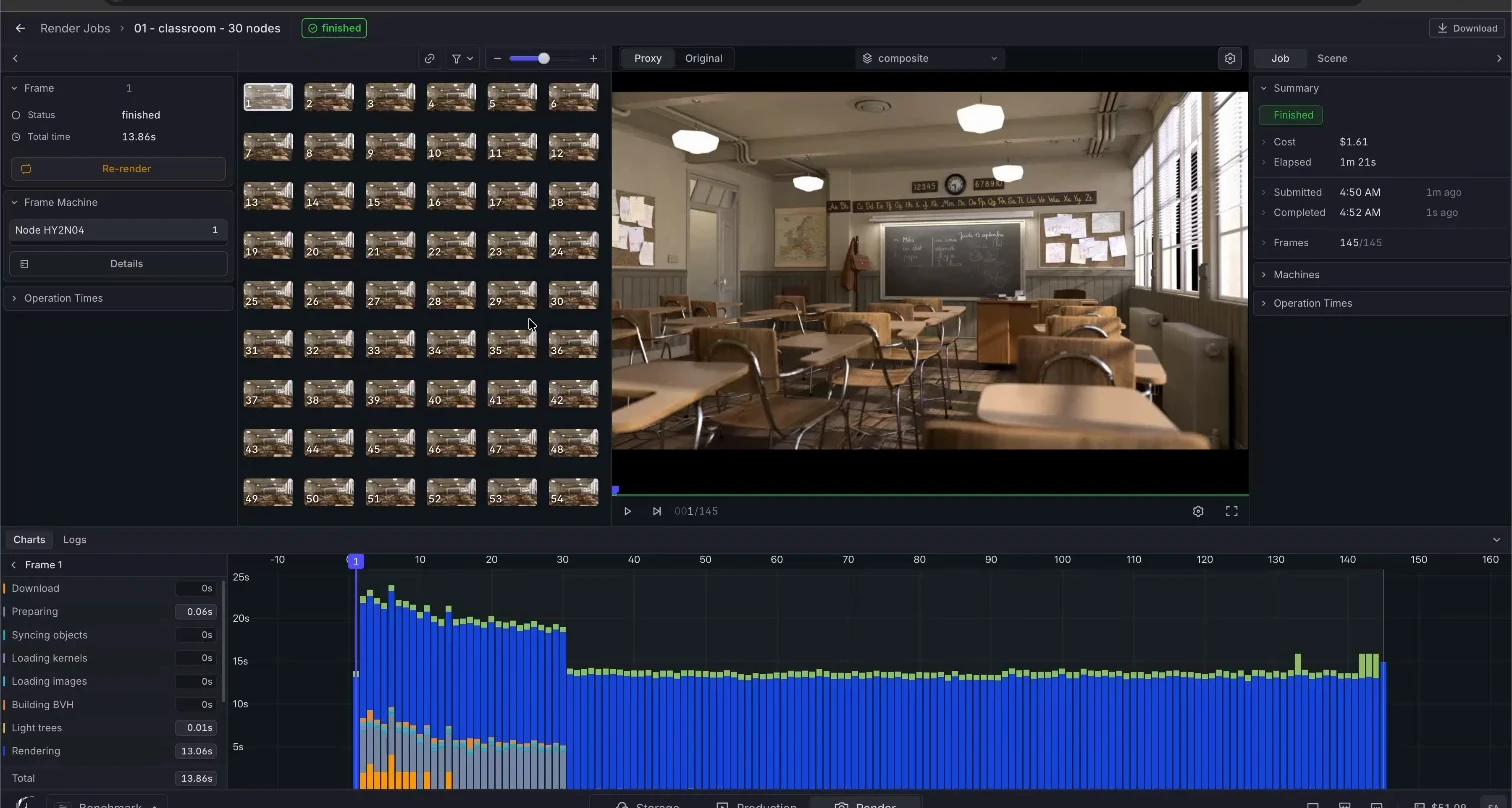
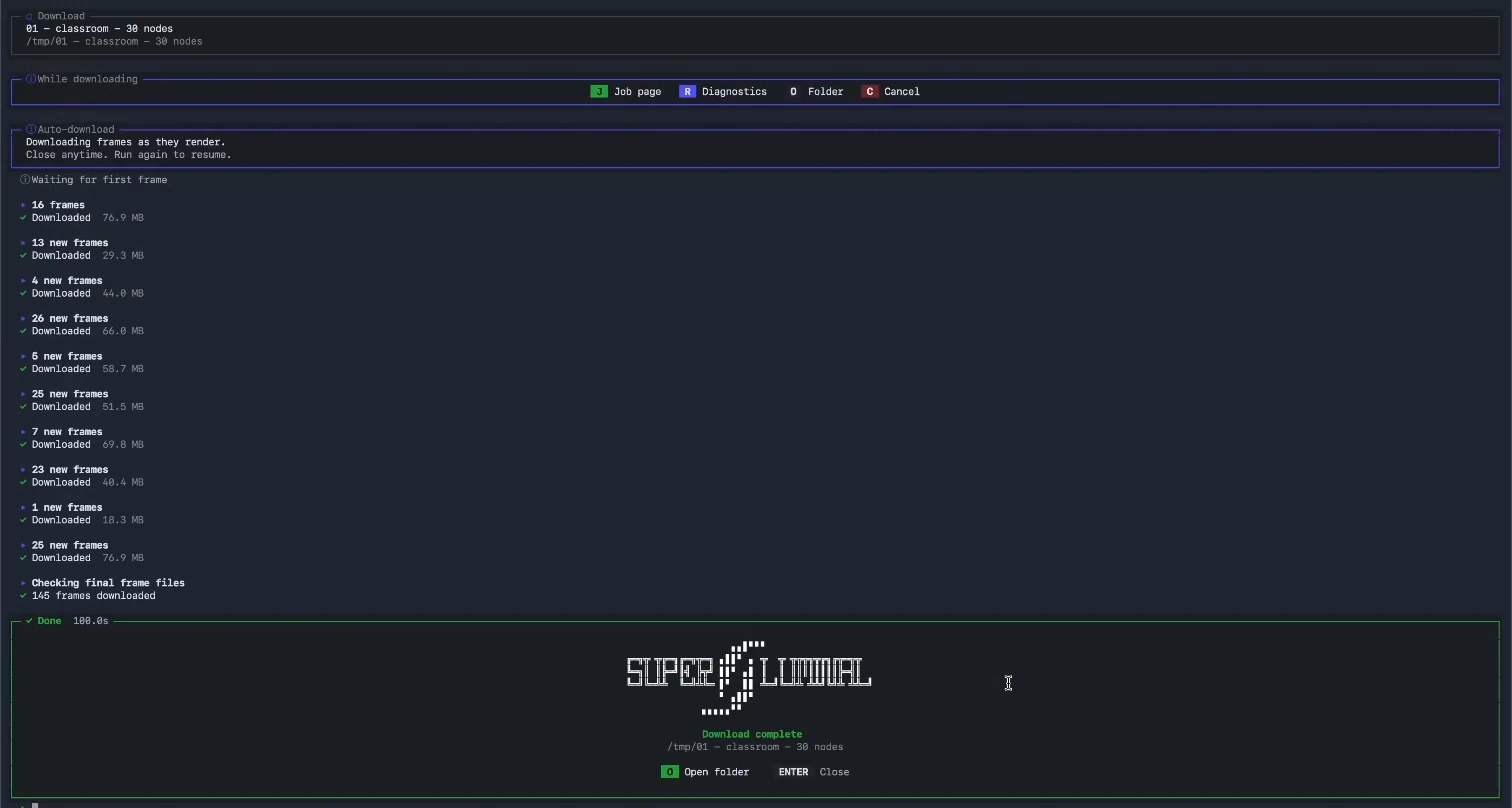
Superluminal recorded workflow
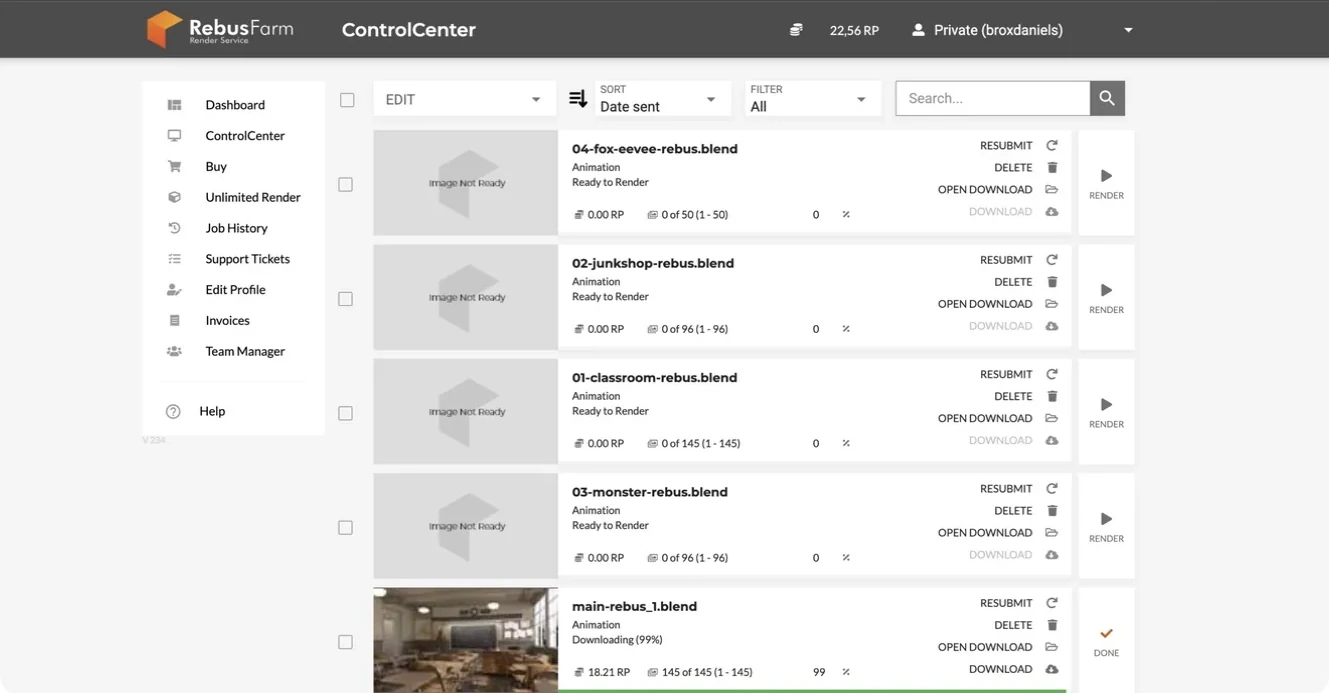
RebusFarm recorded workflow
Rates, upload, and local delivery
Each tested tier showed two rates, and the checkout rate ran about 17 percent above the configured rate every time. Priority+3 showed 0.969 cents per OctaneBench-hour at checkout against 0.825 in configuration.
Superluminal has one rate, and it is the one you are charged. The capacity control shows dollars per GPU-hour for the node count you pick, and the final charge reconciles against exactly that number.
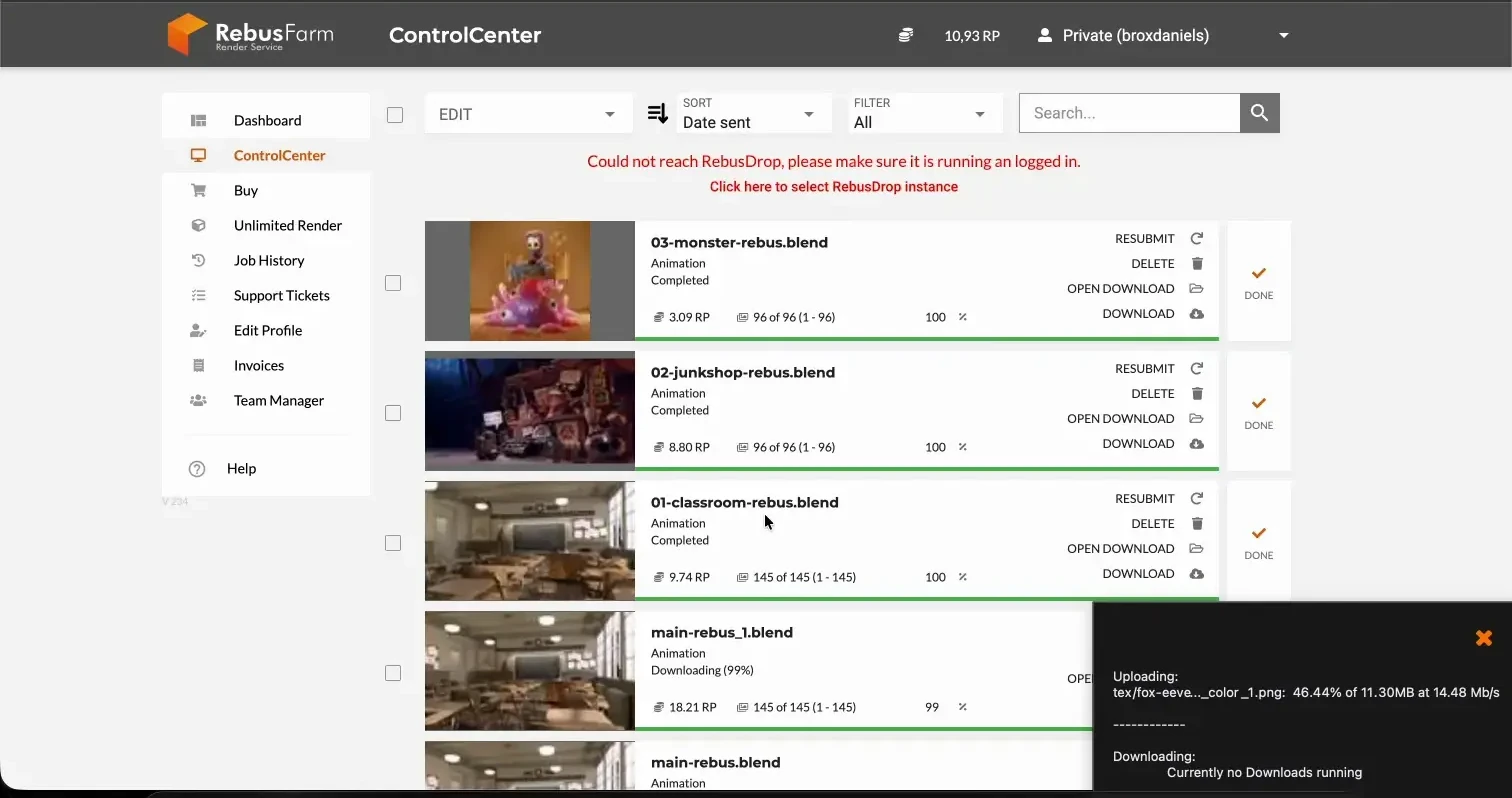
The dollar estimates use a dated purchase of 15 RP for $17.63. The desktop client uploaded at 2.1 MB/s, the slowest measured rate in the test. The interface showed a peak of 18 active nodes.
Running a job means two surfaces: the desktop app submits, a separate web manager monitors. The prepaid balance ran out mid-render on Junk Shop, so we bought more RenderPoints while the farm kept working (Junk Shop recording).
For the three complete local deliveries, the last file arrived 2.2 to 47.1 seconds after RebusFarm reported completion.
The download that paused itself
RebusDrop, the retrieval helper, is where the Fox (EEVEE) job went wrong. It showed a connection warning and paused before the farm finished computing. Restarting it paused again immediately. The job page kept showing a stale cost while the balance had already moved.
The farm completed all 50 frames. Our disk had six when the recording ended. RebusFarm keeps its exact Speed Score, but a render you cannot retrieve is not a render you can deliver.
Superluminal treats delivery as part of the render. The add-on streams each finished frame to disk while later frames render, and an interrupted transfer resumes. Each frame's charge appears on the job page as it lands, in dollars.